
Getting Tift County Court Records
For Superior and State Court files, begin with Clay Pate’s Clerk of Court office. Search re:SearchGA first to pin down the case and filing. Then ask for a plain or certified copy in person at 237 E. 2nd Street. You can also mail P.O. Box 354, Tifton, GA 31793. Or call (229) 386-7810. The published fax is (229) 386-7813. A State Court FAQ also lists (229) 386-7937 for copies. But use the main clerk number unless staff confirms that line.
Georgia standards require a free courthouse terminal or paper alternative for public electronic filings. Tift County does not publish the terminal room, so call first. The county’s open-records route takes verbal or written requests for defined county records. Lower-court files must go to their own clerk.
- Identify the court that owns the case.
- Use re:SearchGA or the proper lower-court search to find the number.
- Write down the exact filing title and date.
- Ask the custodian for plain, certified, or exemplified format.
- Confirm current fee, payment, identification, and delivery.
- Use the county form when ordinary access does not reach a defined record.
Tift County Clerk Counter
The clerk files Superior and State civil and criminal proceedings and takes traffic payments, with separate work areas for those records. The first image comes from the official Tift County Clerk page.
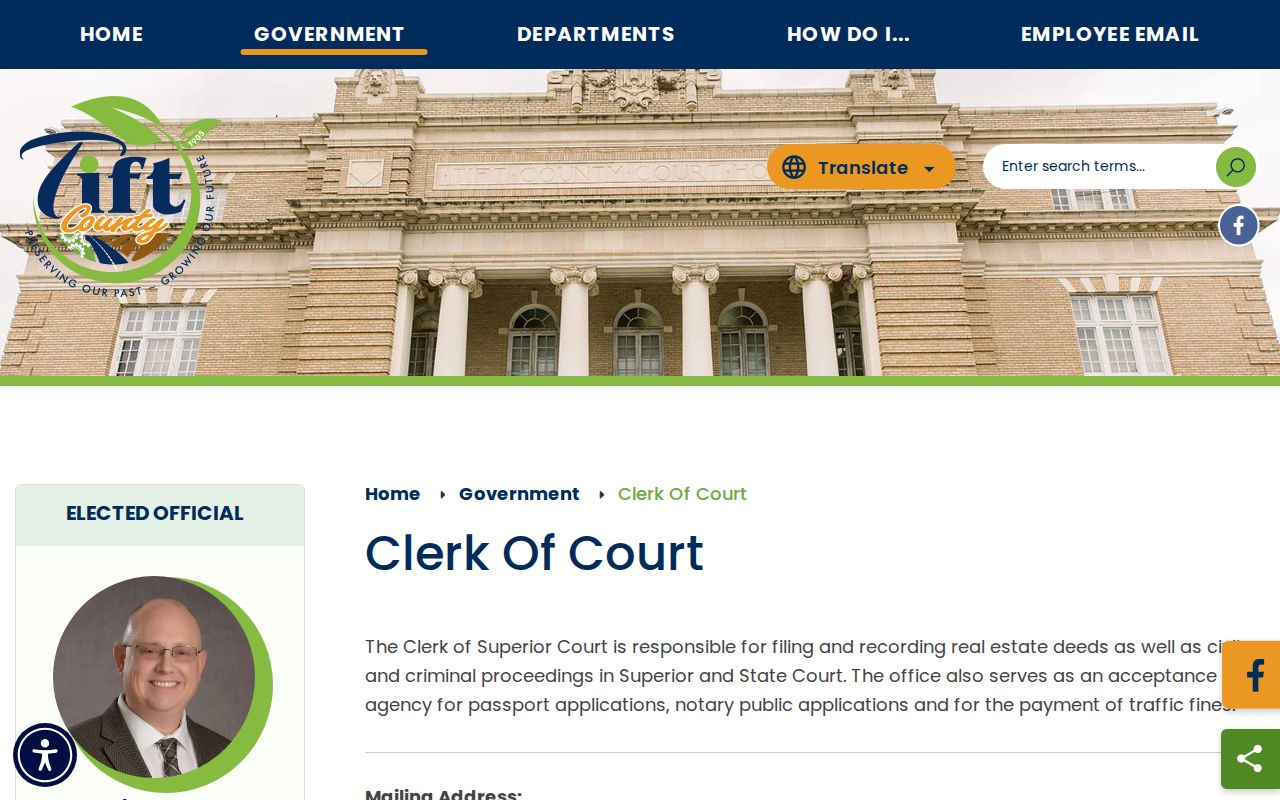
That page ties the public counter to the office’s real filing and copy duties, so the web index is not the final record.
Court Record Types
The docket is the dated index. Behind it sits the record itself. That may be a complaint, petition, answer, motion, order, judgment, exhibit, bond, indictment, accusation, notice, or filed transcript. A payment receipt or search result is not a certified court record. A transcript may need to be ordered from a court reporter. That step is unnecessary if it is already filed.
- Pleadings that begin or answer a case
- Motions and responses asking for court action
- Orders, judgments, and dispositions
- Notices, settings, bonds, and service records
- Filed exhibits and transcripts when public
The Tift State Court forms page lists the printable forms the court accepts for filings.
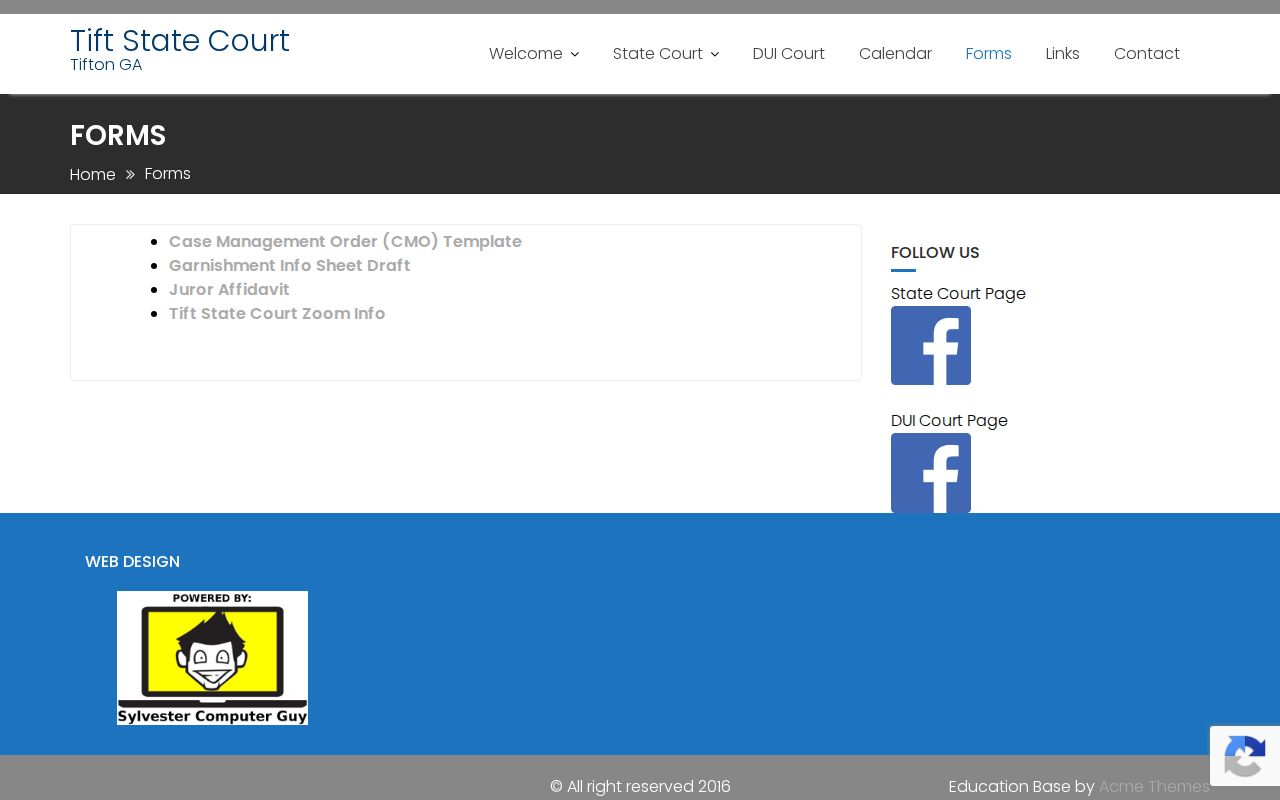
Those forms show why a record request must distinguish the docket entry from the filed document.
Tift County eCertification Route
GSCCCA eCertification can deliver an eligible secure digital certified copy. You create an account. You pick the county and document, and authorize payment. The clerk then reviews the request, and a secure PDF link follows. Availability and price depend on document type and clerk processing. It does not replace a direct request when the file is absent or restricted. The assigned image comes from the official GSCCCA eCertification portal instructions.
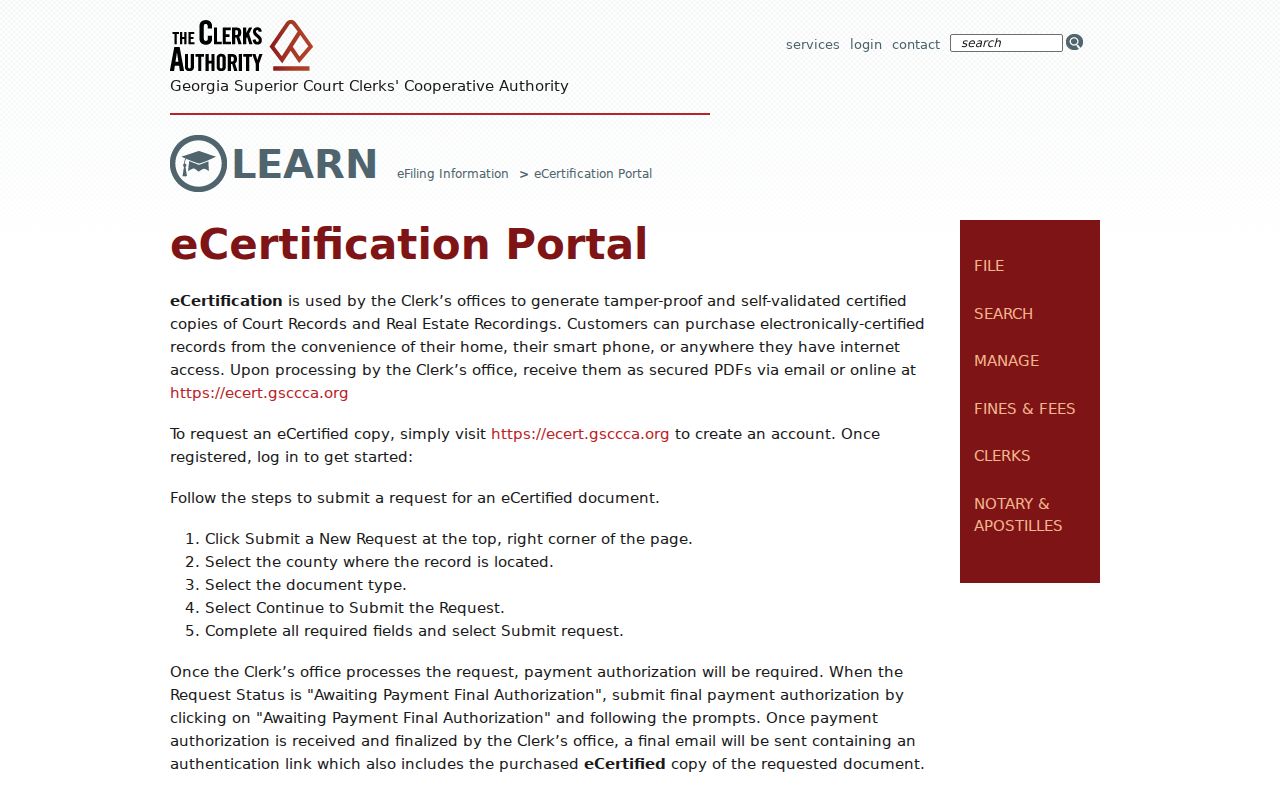
The clerk review step matters, because certification is a clerk act rather than an automatic copy of a search screen.
Inside a Tift County Court Record
A well-scoped request gives staff enough fields to find the file. Tift records can carry a case number or Civil Action File No., caption, court, filing date, document title, setting, and disposition. Criminal samples add count, offense, bond, and counsel fields. Civil case-management forms add discovery, mediation, witnesses, exhibits, and trial choices.
| Case identifier | Case number or Civil Action File No. |
|---|---|
| Caption | The case title and party roles. |
| Docket entry | Date and description of filed activity. |
| Document | The pleading, motion, order, or other filed item. |
| Setting | Hearing type, date, and time when recorded. |
| Disposition | The final or case-ending outcome and date. |
Tift County Open-Records Form
The county form wants a specific description. It also asks for requester identity and contact details, signature, date, and fee acknowledgment. The online request form states that the county sends a cost estimate. It requires payment before inspection or delivery. The three-business-day rule covers an access determination or, where feasible, an explanation. It is not a promise that every request is copied within three days. The image comes from that official form.
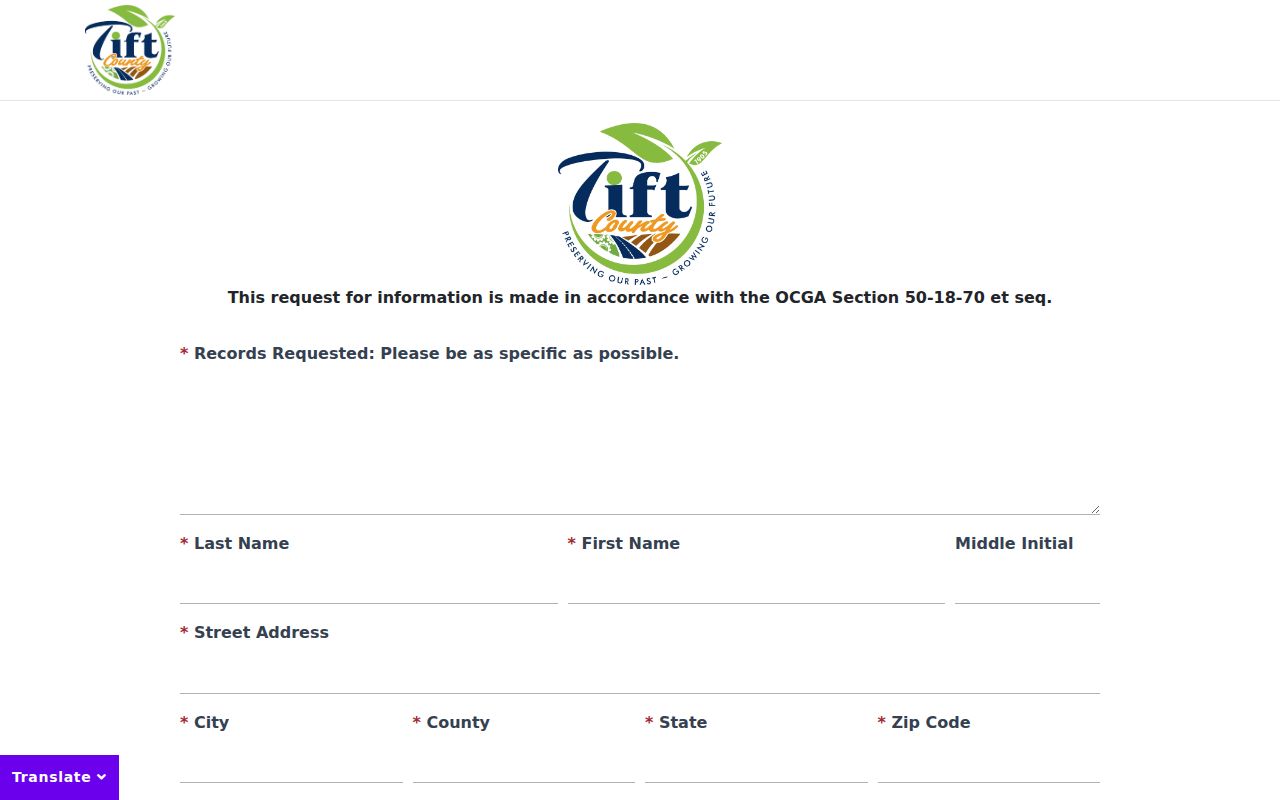
Because the form demands a description, court, number, filing, and date are the most useful facts to supply. The broader county routing page provides the source for the next image.
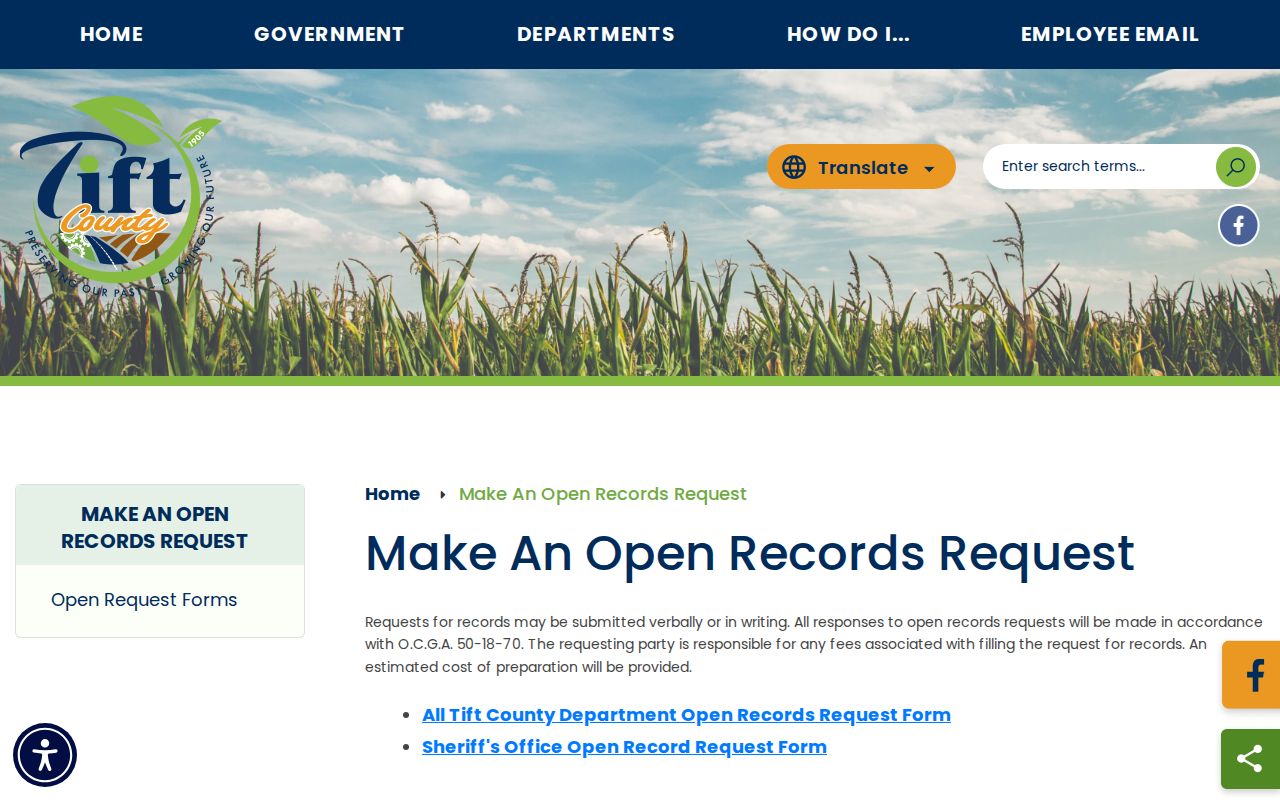
Treat that routing as a fallback; the responsible court clerk is the ordinary first stop for a case file.
Fees and Certified Copies
Ask for a current quote before you pay. Official state baseline material lists the amounts below, while the county open-records form uses a separate charge structure. Mixed requests can include certification, seal, search, retrieval, redaction, or delivery work.
| Item | Amount captured |
|---|---|
| Plain copy, self-service | $0.50 per page |
| Plain copy with clerk help | $1.00 per page |
| Certification or exemplification | $2.50 first page, $0.50 each additional |
| Clerk certificate | $1.00 |
| Court seal | $1.00 |
| County open-records copy | $0.10 per page plus staff time after 15 minutes |
The official GSCCCA Tift profile provides the final assigned image.
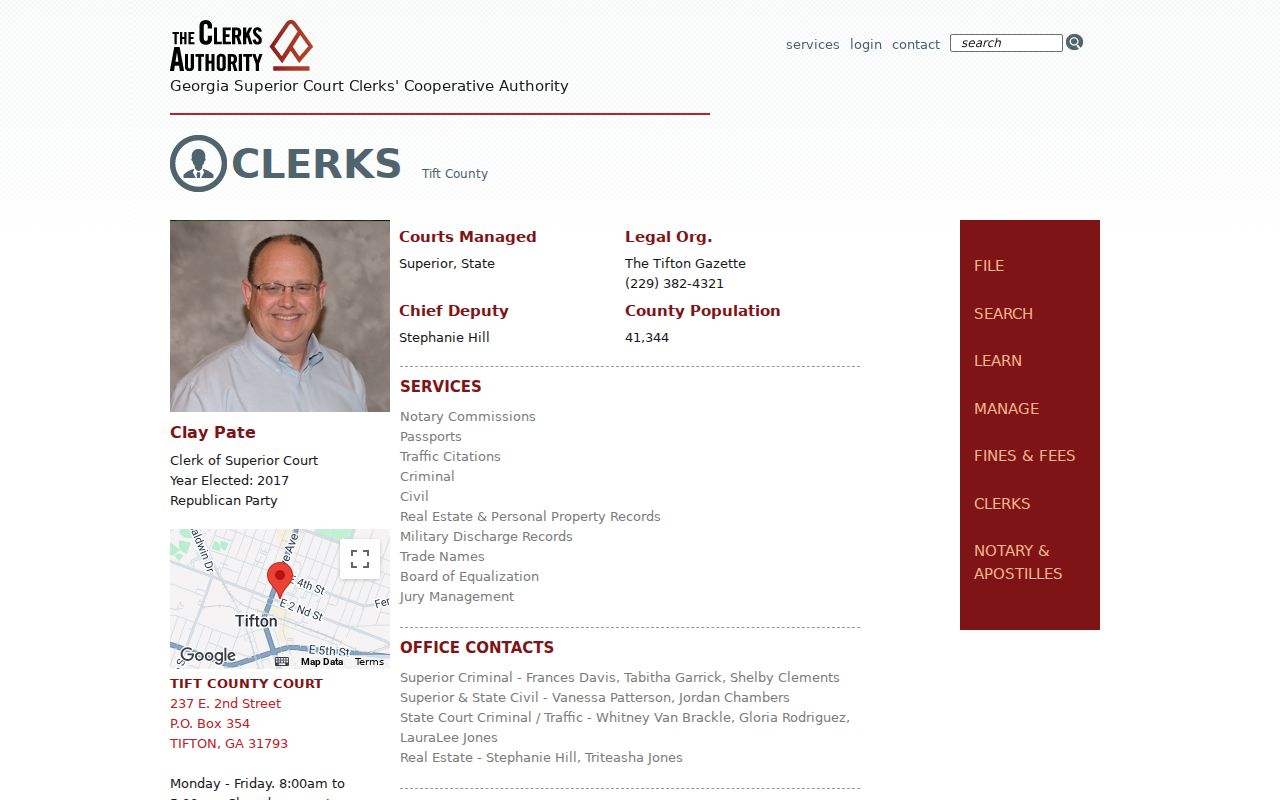
It confirms the clerk’s Superior and State Court roles, which determine where certification begins.
Tift County Lower-Court Custodians
Magistrate Court handles claims up to $15,000. Its files sit at 225 Tift Avenue, Room 211. The phone there is (229) 386-7907. Probate works out of Room 117 at (229) 386-7914. Juvenile is in Suite C1, reachable at (229) 386-7909, though the law restricts who may see those files. Tifton Municipal Court keeps city citations and their outcomes at 130 E. 5th Street, (229) 391-3967. Omega's clerk sits at 5518 Alabama Avenue, (229) 528-4400. Ty Ty City Hall is at 141 E. Elman Street, (229) 382-9476, when you need to confirm who currently holds the city's records.
Resist the urge to mail one request to a single Tift County clerk. Court class, venue, and any transfer history determine where the file actually lives.
Match your request to the language each office uses. A Magistrate requester can name the statement of claim, proof of service, answer, judgment, or dispossessory filing. For Probate, specify the estate, will, guardianship, or other proceeding, and expect its own access rules to apply. Juvenile records carry statutory confidentiality limits. Route that request through the authorized process at the Juvenile clerk's office. A traffic request to a municipal court should name the citation and the issuing court. Add the court date, and the disposition or judgment you want.
Transfers and appeals can split the paper trail. A Tifton municipal jury demand may push a case into State Court. A Magistrate appeal can open a receiving-court docket in State or Superior Court. The original clerk often holds the transfer or appeal entry while later orders land with the receiving clerk. Ask whether a second case number was assigned. Then request documents from each office separately rather than assuming one certified packet covers both files.
Sealed Records and Public Access
Access rules come from Uniform Superior Court Rules 21 through 21.6, which treat court records as public unless law or procedure limits them and require protected identifiers to be redacted. The Georgia Open Records Act guide walks through presumed access, lawful exceptions, costs, and the response framework. Juvenile statutes add their own confidentiality layer.
Key access rule: A sealed, juvenile, sensitive, or non-integrated file may not appear online. Ask the responsible clerk about lawful inspection, certified-copy eligibility, or the order needed for access.
Public terminals, and paper when needed, give free access to public electronic filings. Copies and certification can still cost money. Use the full search index to identify a document before requesting it through the Tift County case lookup.
Tift County Transcript Requests
A transcript takes a different path from an ordinary docket copy. The court reporter creates the verbatim record. The clerk does not. The clerk can copy a transcript only once it has been filed. The court itself can tell you whether one exists. It can also say which reporter handled the case and hearing date. No Tift-specific reporter order form is available. So start with a call.
State material lists per-page certified-transcript rates for criminal cases, with one rate within 120 days and a higher one after 120 days, plus a separate expedited rate. Civil and juvenile schedules differ. These amounts are not ordinary clerk copy fees. Get a current quote before ordering. A rush request, attendance time, exhibits, delivery, and certification can all move the total. When no transcript has been prepared, ask whether an audio record exists. Confirm the proceeding was reported at all. The clerk can point to a filed transcript entry. But do not count on the clerk to create one. A precise hearing date, judge, courtroom, and setting type helps the court find the right reporter. It saves hunting the wrong session. If the transcript is filed and public, give its docket date and title when you request a plain or certified copy.